Who is We?
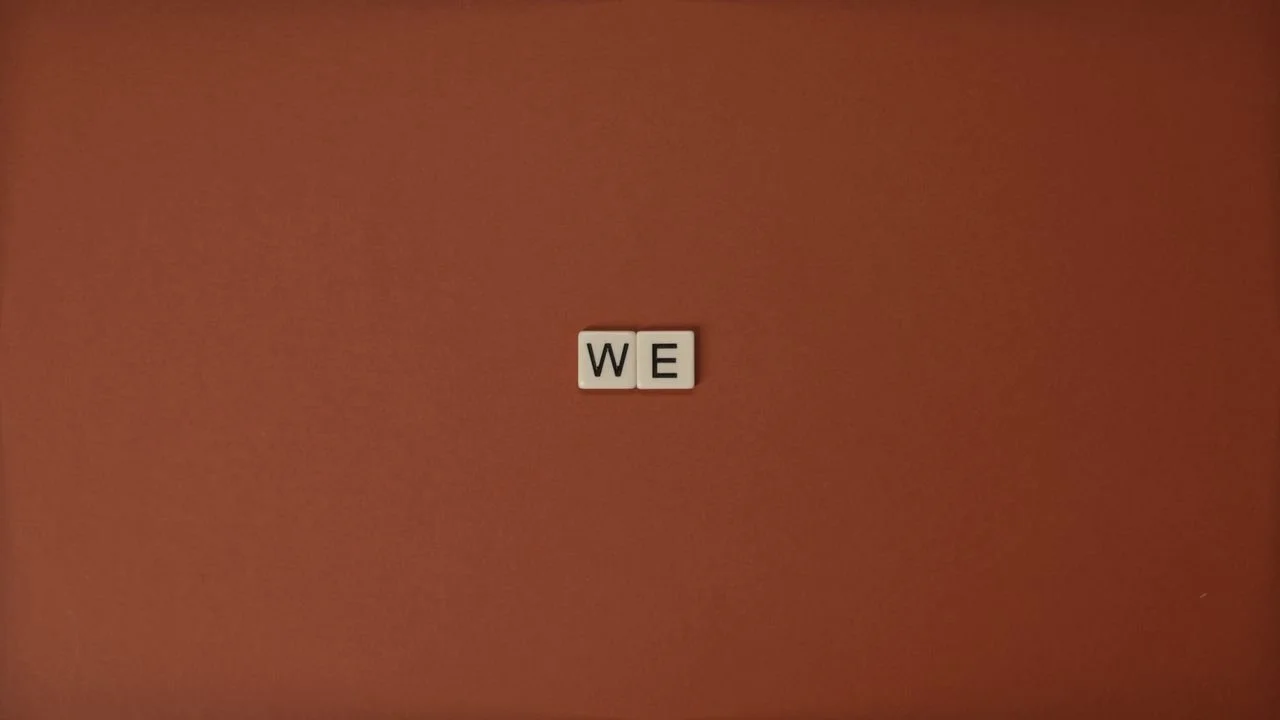
Equity gives leaders the opportunity to plan with clarity. Advocacy strategies should always clearly name who your work centers on and why.
Lex Roman, a business strategist that I follow, recently asked an interesting question in one of her newsletters. She asked: Do you say "we" or "me" when marketing a solo business?
I responded that I started out as “me” and transitioned to “we” as my business grew.
That question got me thinking. I am always struck by who uses the word “we” and when they use it. “We” assumes a similarity, whether it is real or not.
Take social media for example.
Technology experts often say that our online algorithms can make it feel like everyone is sharing your unique experience. It feels real. But in reality, social media is different for each person because they are only seeing iterations of things they already engage with. Everyone is experiencing their own mini echo chambers.
In recent research co-authored by Robert W. Gregory, associate professor of business technology at the University of Miami:
“What appears in a feed is the result of deliberate design, not a neutral window onto the world — and that understanding how these systems work is ultimately what gives users the agency to make more informed choices about where and how they participate online.”

Equity always leaders the opportunity to plan with clarity.
But back to the framing question: Who is We?
This question strikes at the heart of what a lot of my work uncovers for executive leaders: we, as individuals, often have different experiences in the same place at the same time. Almost like social media but in real life.
I think about the economy. Some people are really struggling. Looking at my LinkedIn feed, lots of people are looking for work. Many small businesses are struggling. But many are not.
Inflation is high. Groceries are high. Gas is high. For me, it feels like prices have surged up on everything at once. Families are feeling the squeeze of higher prices for the goods they need as school starts, which pressures family budgets even more. But this is not everyone’s reality. Some families are living their lives just as they did before January 2025. Others, not so much.
According to the Economic Policy Institute, in 2025 Black women suffered the largest losses in employment in the last 25 years, with the greatest drop being among the college educated. The workforce is being reshaped in ways that are not impacting workers in the same ways, by race and gender.
These shifts are not a complete surprise; in 2024, I wrote:
Many of the civil rights era gains that Black people fought for will continue to be rolled back to ensure sameness and further entrench racialized economic privilege. That’s the trap of white supremacy. It’s the legacy of our nation’s origins.
The nation's deeds have always contradicted its narrative. That divide dates back to before the American founding. I always felt there was a “public trying” to live into America’s idealized notion of a multi-racial democracy. In some decades, those efforts to “try” were feeble, others nonexistent. Others were powerful. Meaningful.
As a Black woman, this is my reality. It’s the parallel universe I live in. Yet, others feel thrilled with the outcome and genuinely believe their lives will improve. Only time will tell if this belief is true.
This dual reality again begs the question — Who is We?
When we talk about threats to democracy, the dying of our institutions, and the country’s growing national debt, I realize that, even in what seem like huge macro-level events, people experience them very differently. Some folks have lost their jobs; others' stock portfolios are doing very well. Is this a racialized experience? In some ways, yes. But, in other ways the suffering that people are experiencing extends far beyond it.
All of this has me thinking about the “we” in our advocacy conversations. In most communities, there is more than one we. Equity gives leaders the opportunity to plan with clarity. I think our advocacy work should clearly name who your work centers and why.
This clarity is the core of telling structural stories.
As you engage in strategy conversations that lead with "we," ask yourself this very important question: Who is We?